Butternut Squash Lasagna
A lasagna with no meat and no tomato has nothing to hide behind and nothing holding it together. Both problems have the same solution.
Total: 2 hrYield: 8 servingsMethod: Baking
In this recipe
Roast it, do not boil it
Butternut squash is roughly 87% water. Boiled or steamed, it absorbs more, and every drop of it ends up inside the lasagna where there is no way for it to escape. That is why so many vegetable lasagnas come out with a pool in the bottom of the dish.
Roasting does the opposite. Thirty-five minutes at 425°F drives water off rather than in, concentrates the sugars, and browns the cut edges — which adds a savory note that boiled squash simply does not have. The purée that results is thick enough to spread rather than pour.
The unpeeled garlic cloves roasting alongside are worth the ten seconds they cost. They come out sweet and soft, squeeze straight out of their skins, and mash into the squash to give it a savory base that stops the filling reading as sweet.
A coarse mash is better than a smooth purée here. Some texture in the squash layer gives the slice something to be, where a perfectly smooth filling disappears into the béchamel.
How the dish stacks
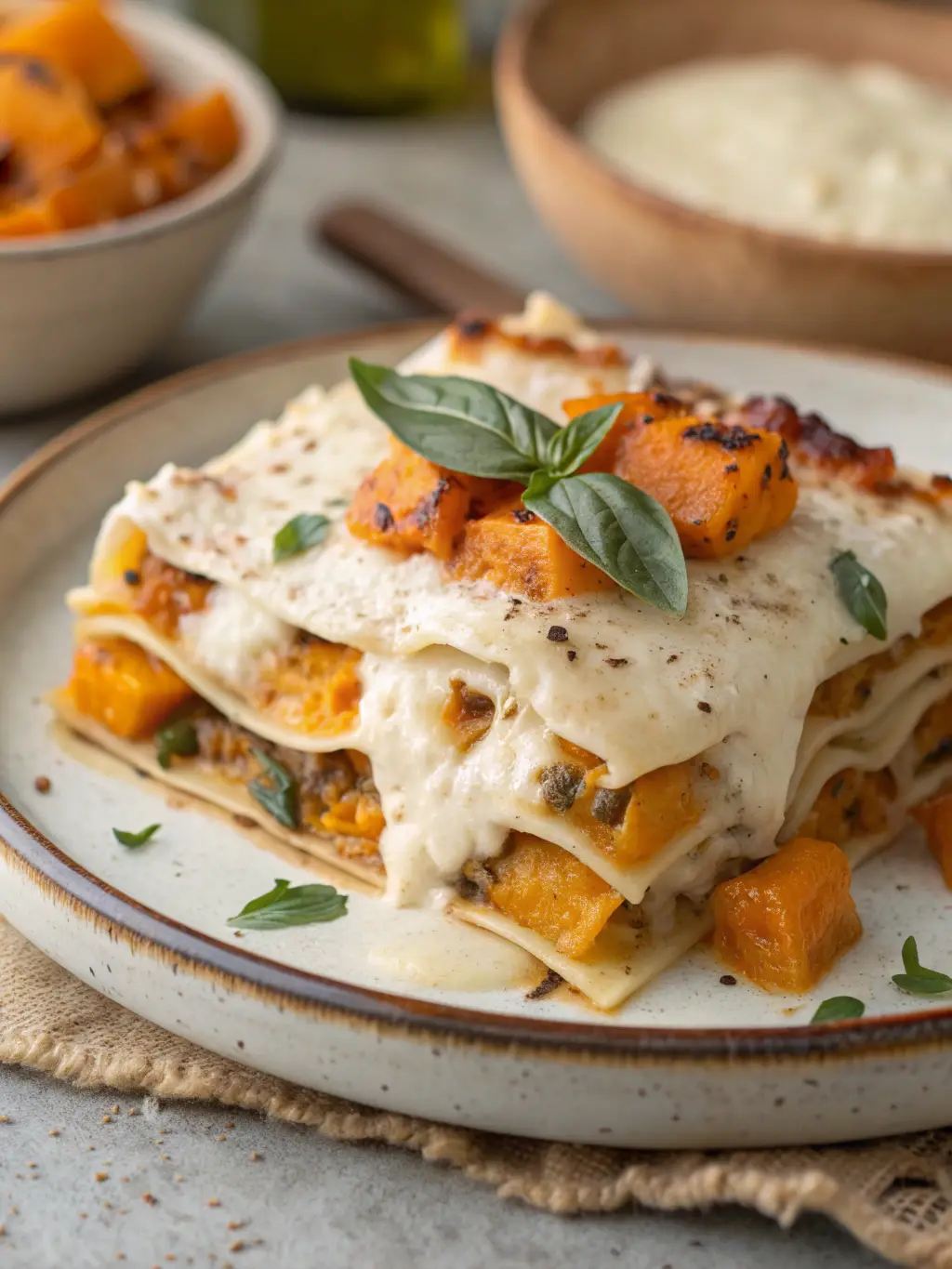
Four noodle layers, three fillings, and the béchamel appearing five separate times.
- Half a cup of bechamelJust enough to stop the first noodles drying onto the dish. More than this and the bottom layer never sets.
- Noodles, squash, ricotta, bechamel, mozzarellaThe same order three times. Squash spread first because it is the stiffest; ricotta in spoonfuls over it rather than smoothed, which would drag the layer beneath.
- Noodles, bechamel to the edges, both cheesesEvery noodle has to be covered. Exposed pasta at 375°F turns to leather in twenty minutes.
- CoveredSteam finishes the noodles and heats the interior without browning the top too early.
- BrowningNow the mozzarella and parmesan color. This is also when the last of the excess moisture leaves.
What holds it together
A meat lasagna is bound by a ragù that has already been reduced for an hour, plus the protein itself. This one has neither, so three other things have to do that job.
- 01A properly thick bechamelFive tablespoons of butter and a third of a cup of flour to three and a half cups of milk is a firm ratio on purpose. A thin béchamel is the single most common reason a vegetable lasagna runs.
- 02The egg in the ricottaIt sets that layer into something with structure. Without it the ricotta stays loose and slides out of the slice the moment it is cut.
- 03Twenty minutes of restLonger than a meat lasagna needs. The starch and the set béchamel firm up considerably as the dish cools, and cutting early undoes all of the above.
Troubleshooting
| Problem | Cause | Fix |
|---|---|---|
| There is liquid in the bottom of the dish | The squash was boiled or steamed rather than roasted. | Roast it at 425°F until browned at the edges. This is the difference between a filling and a purée that weeps. |
| It collapses when cut | Rested too briefly, or the béchamel was thin. | Twenty minutes, and keep the flour at a third of a cup. A vegetable lasagna needs more setting time, not less. |
| It tastes sweet | The roasted garlic and the salt were underplayed. | Both are there to make the squash savory. The nutmeg helps too — a quarter teaspoon in each of two components. |
| The top edges are hard | Noodles left uncovered by sauce. | Spread the final béchamel right to the corners, and keep the foil on for the first 35 minutes. |
| The sage disappeared | It was left in the butter through the béchamel. | Fry the leaves, lift them out, and crumble them over the finished dish where they stay crisp and aromatic. |
Storage and reheating
Refrigerate covered up to 4 days. Like all lasagna it cuts far more cleanly cold, so portioning the next day is easier than portioning on the night.
Reheat to 165°F (74°C), the USDA safe temperature for leftovers, covered at 325°F for around 20 minutes. Add the crisp sage fresh if you have it — the pieces from the first bake soften completely overnight.
It can be assembled a day ahead and baked from cold with about 10 extra minutes under foil. It freezes for 3 months unbaked, which works better than freezing it cooked; thaw fully in the refrigerator before baking.
Butternut Squash Lasagna
Roasted butternut mashed into a savory filling, layered with ricotta, sage béchamel and mozzarella. The squash is roasted rather than boiled, which is what keeps the lasagna from going watery.
- Vegetarian
- Main Dish
- Baking
Cook’s checkpoint
- Frying oil
- 350°F / 175°C
- Chicken, thickest part
- 165°F / 74°C
Use a food thermometer. Color and time alone don’t confirm poultry is done.
Ingredients
For the squash
For the sage bechamel
For the ricotta layer
To assemble
Instructions
Notes
- Pre-cubed butternut from the supermarket saves the hardest part of the prep and roasts identically. Frozen cubes do not — they release too much water even when roasted.
- Twenty minutes of rest is not padding. Without meat or a tomato sauce to bind it, this lasagna relies entirely on the béchamel and the egg in the ricotta setting as it cools.
Cooking Mode
Questions
- Can no-boil noodles be used?
- Yes, skipping the boiling step. They draw liquid from the sauce as they cook, so add about half a cup of extra milk to the béchamel to compensate.
- Is there a substitute for butternut?
- Kabocha and red kuri both roast and mash similarly. Acorn squash is stringier and less sweet. Any of them should be roasted rather than boiled for the same reason.
- Can this be made vegan?
- The béchamel works with a plant milk and oil. The ricotta layer is harder — a blended cashew or tofu filling can substitute but will not set the way the egg does, so expect a looser slice.
- Why nutmeg twice?
- A quarter teaspoon in the squash and another in the béchamel. It should not be identifiable in the finished dish; it is there to stop a large quantity of dairy and sweet vegetable tasting flat.