Chicken Fajitas
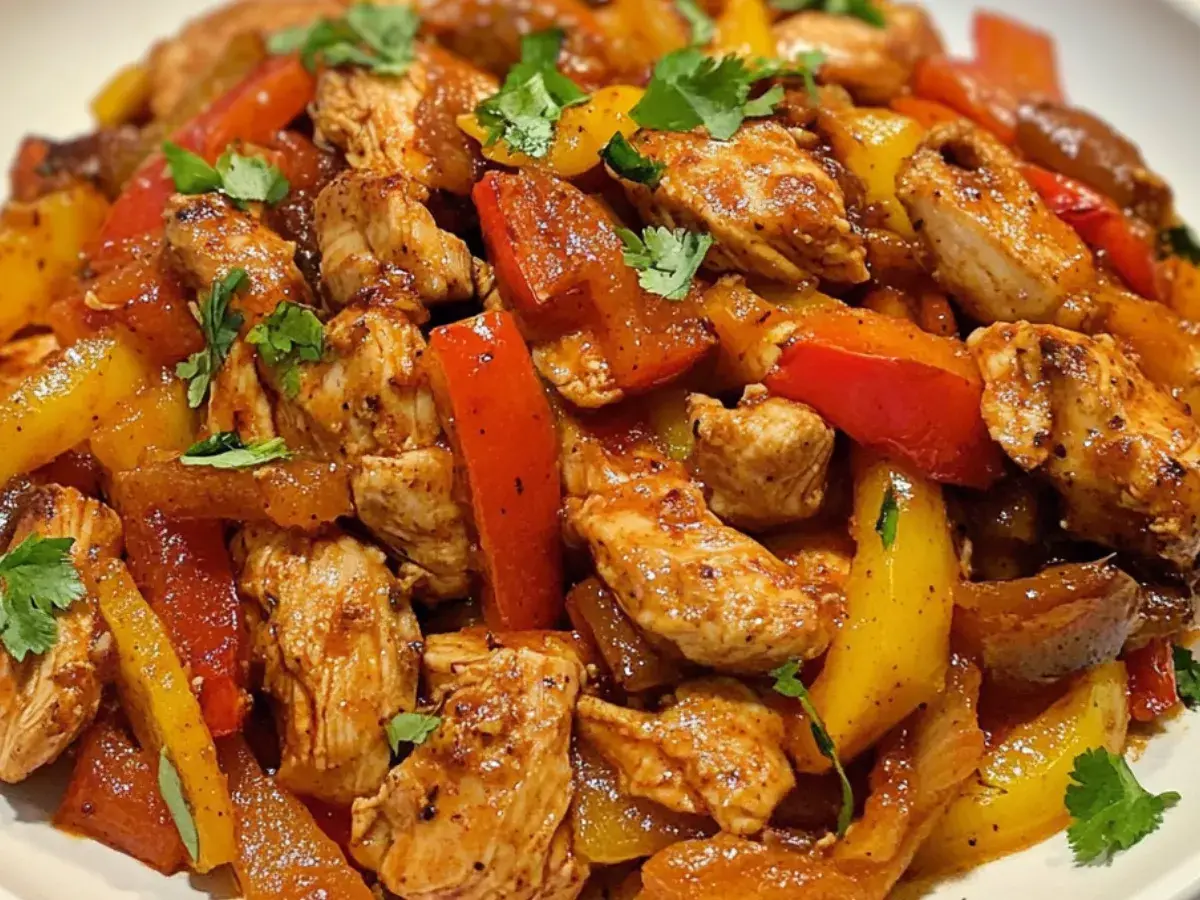
Chicken and peppers want different things from a pan. Cooking them apart is the single decision this recipe is built on.
Total: 40 minYield: 4 servingsMethod: Pan Searing
In this recipe
Everything on the board first
Total cooking time is under fifteen minutes on high heat. There is no room to be slicing anything once the pan is hot.
- Chicken sliced across the grain into even 1/2-inch strips, so they finish together.
- Peppers and onion cut to roughly the same width as the chicken — mismatched sizes cook at different rates in the same pan.
- Seasoning mixed and divided: two-thirds for the chicken, one-third held back for the vegetables.
- Limes juiced and wedges cut before anything goes in the skillet.
- Tortillas out of the packet and a dry pan ready for warming them.
- A plate beside the stove for the cooked chicken to rest on.
The order things hit the pan
Two components, two temperatures, one skillet — sequenced so nothing waits at the wrong stage.
- Chicken, in batchesHigh heat, single layer, left alone for the first two minutes. This is where the browning happens, and it only happens with space around each strip.
- Chicken outOnto a plate as soon as it reaches 165°F. Holding it in the pan while the vegetables cook is the most common way this dish turns dry.
- Peppers and onion, still highFive to six minutes with minimal stirring. Charred edges and a bit of crunch, not soft and sweated.
- Seasoning, last 30 secondsThe remaining third goes on the vegetables at the end. Ground spices on a screaming pan for five minutes turn bitter.
- Reunite and finishChicken back in with its juices, thirty seconds, then off the heat and lime over. Order matters — lime on a hot burner simply boils away.
The seasoning blend
Eight things in one bowl, doing four different jobs.
- Chili powder
- The base, and mostly a flavor rather than a heat source — most supermarket chili powder is a mild blend that already contains cumin and oregano.
- Cumin and oregano
- The pair that makes the blend read as Tex-Mex rather than generic barbecue seasoning. Both are earthy and neither should dominate.
- Smoked paprika
- Doing the work a grill would otherwise do. It is the reason skillet fajitas can taste like they came off live fire.
- Cayenne
- The only genuine heat in the mix, at half a teaspoon across a pound and a half of chicken. Adjust this alone rather than increasing the chili powder, which changes the whole flavor.
- Kosher salt
- Mixed into the blend so it is distributed evenly. A store-bought packet would carry considerably more, which is the main practical argument for mixing your own.
Troubleshooting
| Problem | Cause | Fix |
|---|---|---|
| The chicken is dry | It stayed in the pan while the vegetables cooked, or it was cut too thin. | Take it out at 165°F and return it only for the final 30 seconds. Half-inch strips are the right width. |
| Everything steamed and nothing browned | The pan was crowded or not hot enough. | Two batches on a genuinely hot cast-iron skillet. Wait for the oil to shimmer before anything goes in. |
| The peppers are limp | Too long on the heat, or stirred constantly. | Five to six minutes with only occasional stirring. They should still have bite when they leave the pan. |
| The spices taste burnt and bitter | The vegetable seasoning went on too early over high heat. | Hold it for the last 30 seconds. |
| The tortillas tear when rolled | They went in cold. | Twenty to thirty seconds a side in a dry pan makes them pliable. Keep them wrapped in a towel afterwards. |
Storage and reheating
Keep the filling and the tortillas separate, refrigerated up to 3 days. Assembled fajitas go soggy within the hour.
Reheat the filling to 165°F (74°C), the USDA safe temperature for leftovers, in a hot skillet for a minute or two. A microwave will get it to temperature but softens everything the high heat achieved.
The cooked filling freezes for up to 2 months, though the peppers arrive noticeably softer. The seasoning blend itself keeps in a sealed jar for months and is worth mixing in a triple batch.
Chicken Fajitas
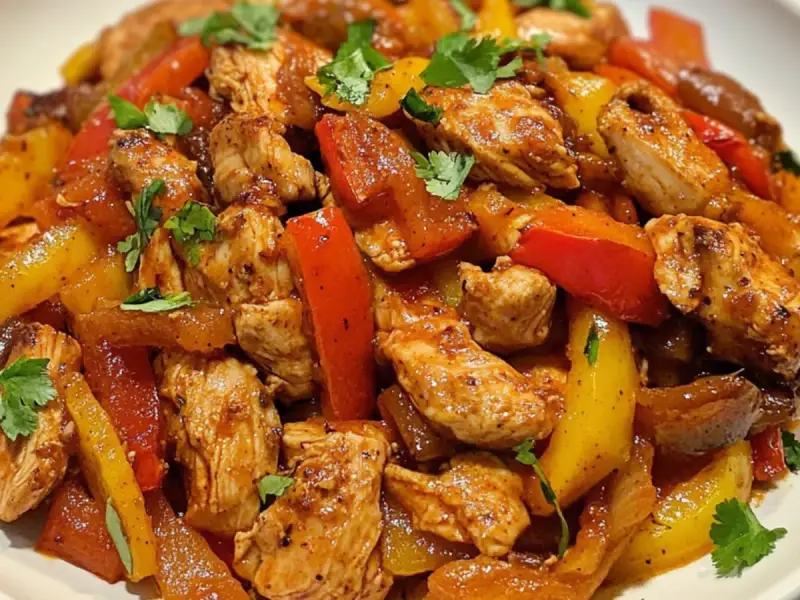
Chicken strips and peppers cooked separately over high heat in a cast-iron skillet, tossed together at the end with lime, and rolled into warm tortillas. The seasoning is mixed rather than bought.
- Chicken
- Main Dish
- Pan Searing
Cook’s checkpoint
- Frying oil
- 350°F / 175°C
- Chicken, thickest part
- 165°F / 74°C
Use a food thermometer. Color and time alone don’t confirm poultry is done.
Ingredients
For the seasoning
For the skillet
To serve
Instructions
Notes
- Chicken thighs work and are more forgiving over high heat; slice them the same width and expect an extra minute.
- Cast iron holds heat better than stainless through a batch of cold chicken, which is the whole reason it is specified here.
Cooking Mode
Questions
- Why cook the chicken and vegetables separately?
- They need different amounts of time and release different amounts of moisture. Together in one pan the water from the peppers stops the chicken browning, and by the time the chicken is done the peppers have collapsed.
- Corn or flour tortillas?
- Flour is the usual choice for fajitas because it rolls without cracking and holds a fuller filling. Corn works and has more flavor, but warm it carefully and expect to fill it less.
- Can the chicken be seasoned the night before?
- Yes, and the flavor improves. Keep it refrigerated and let it sit out for 15 minutes before cooking so it does not chill the pan.
- Is a cast-iron skillet essential?
- No, but it helps. Its advantage is thermal mass: it stays hot when cold chicken lands on it, where a thin pan drops in temperature and steams the first batch.