Fried Chicken and Mashed Potatoes
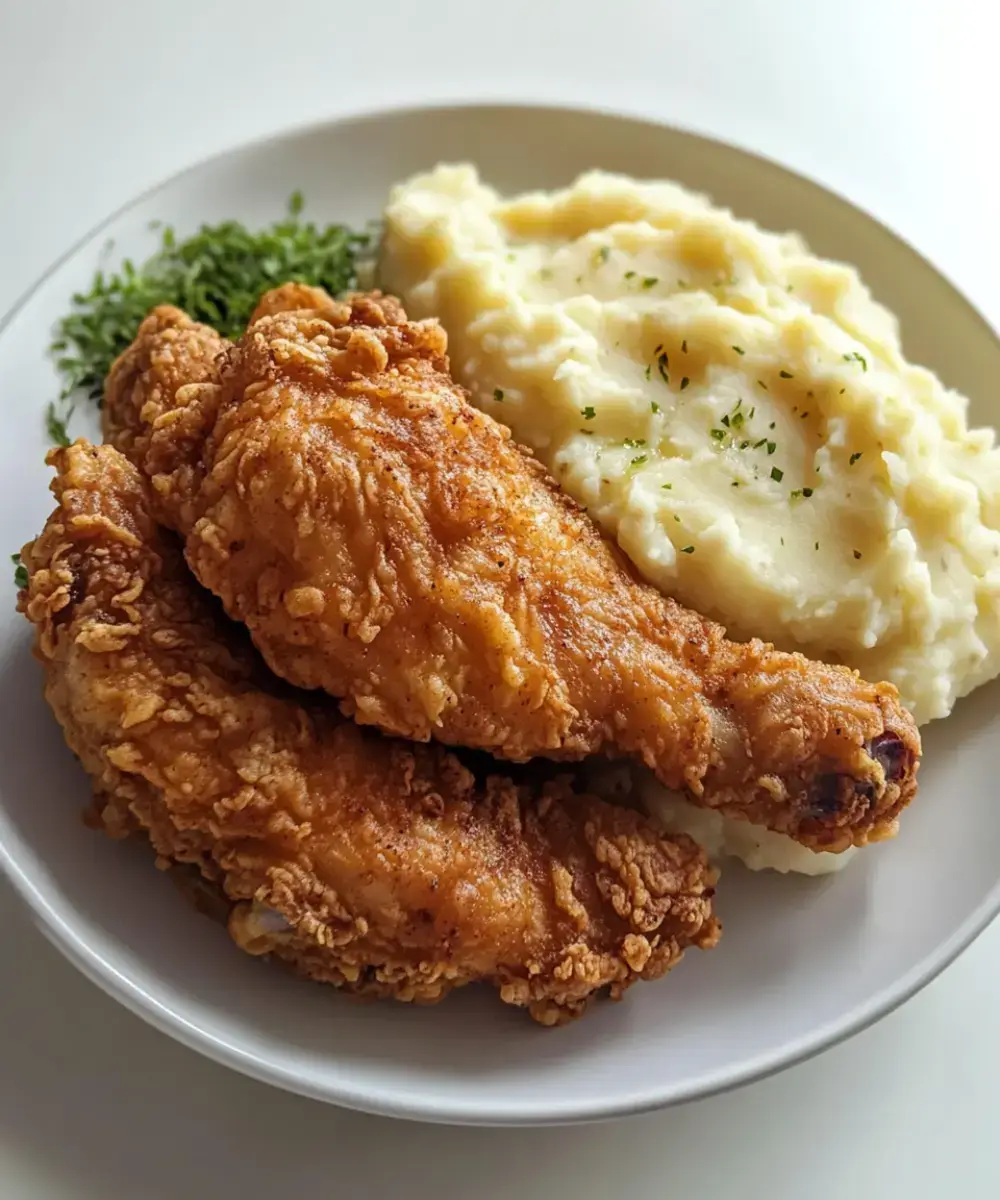
Two components with completely different demands, cooked in parallel so neither is waiting on the other.
Total: 5 hr 10 minYield: 4 servingsMethod: Deep Frying
In this recipe
Running two clocks at once
This plate is really two recipes that have to finish together. Fried chicken holds its crust for about ten minutes before it starts softening. Mashed potatoes go from silky to pasty if they sit and are stirred again, and they go cold faster than anything else on the plate.
The sequence that works is: oil heating and potatoes boiling at the same time, chicken coated and resting while both come up, then chicken frying while the potatoes are drained and mashed. The mash finishes during the last batch of chicken.
The alternative — potatoes first, then chicken — means twenty minutes of mash sitting in a pot losing heat and texture. Reheated mash can be rescued with more butter and milk, but it is never the same thing.
Before the oil goes on the heat
Eight cups of oil at 350°F is the most hazardous thing in this recipe and deserves a proper setup.
- Heavy, deep pot filled no more than halfway — food going in causes a surge, and a fuller pot overflows.
- Clip-on thermometer attached. Guessing gives you either greasy chicken at 300°F or a burnt crust and a raw center at 400°F.
- A lid that fits, within arm's reach. If oil ever catches, the lid smothers it; water thrown on burning oil turns to steam instantly and throws flaming fat.
- Chicken as dry as a buttermilk soak allows — let each piece drip properly before it goes into the flour.
- Lower pieces in away from you, never drop them.
- A wire rack ready. Draining on paper traps steam and softens the crust you just made.
The frying
Bone-in pieces need long enough for heat to reach the bone without the crust burning, which is why 350°F rather than hotter.
- Coat, then wait 10 minutesThe crust hydrates against the damp surface and bonds. Chicken fried straight after coating sheds its crust into the oil.
- 3-4 pieces, 350°FMore than that and the oil temperature collapses. Recovery between batches is not optional.
- 12-15 minutes, one turnLong enough for bone-in dark meat. Constant turning knocks the crust off before it has set.
- 165°F at the thickest pointAway from the bone. Color is not a doneness indicator — a piece can be deep golden and still be under temperature inside.
- Rack, not paperAir underneath keeps the bottom crisp. Paper towel steams it soft within a minute or two.
The potatoes, in the gaps
Start them in cold salted water rather than dropping them into boiling water. Cold-start cooking brings the outside and the center along together; a hot start leaves you with mushy edges around a firm core.
The step people skip is drying. After draining, return the potatoes to the empty hot pot for a minute and let the residual moisture steam off — you can see it stop. Mashing wet potatoes produces a loose, gluey texture no amount of butter fixes.
Butter before milk, and the milk warm. Fat coats the starch granules first and keeps them from bursting; warm liquid is absorbed smoothly where cold liquid makes the starch seize and stiffen. And mash rather than whip — a food processor turns potato starch into wallpaper paste in about ten seconds.
Troubleshooting
| Problem | Cause | Fix |
|---|---|---|
| The crust fell off in the oil | The coated chicken went straight into the pot. | Rest coated pieces on a rack for 10 minutes first so the flour hydrates and grips. |
| The chicken is dark outside and pink at the bone | The oil was too hot. | Hold 350°F. Bone-in pieces need time, and higher heat only browns the outside faster. |
| The crust is greasy | The oil dropped below temperature. | Three or four pieces per batch, and wait for recovery to 350°F between them. |
| The mash is gluey | Overworked, or the potatoes were wet. | Steam them dry in the pot, mash by hand, and stop as soon as it is smooth. |
| The mash is stiff and cold | Cold milk, or it sat too long. | Warm the milk, and time the mash to finish during the last batch of chicken. |
Storage and reheating
Store the two components separately, refrigerated up to 3 days. They want completely different reheating and combining them in one container guarantees soggy crust.
Reheat both to 165°F (74°C), the USDA safe temperature for leftovers. Chicken goes on a rack in a 375°F oven for 12 to 15 minutes, which brings back most of the crust; a microwave destroys it entirely. Mash reheats best in a saucepan over low heat with a splash of milk stirred in.
Fried chicken freezes for 2 months and reheats acceptably from frozen at 375°F for about 25 minutes. Mashed potatoes freeze poorly — the starch separates and turns grainy on thawing.
Fried Chicken and Mashed Potatoes
Buttermilk-soaked chicken in a seasoned flour crust fried at 350°F, with mashed potatoes built in parallel so both land hot. Two components, two clocks, one plate.
- Chicken
- Main Dish
- Deep Frying
The frying oil is a fixed quantity set by the pot rather than by the number of servings, and the oil temperature does not change with batch size. Scaling these numbers would imply multiplying the oil and would give a misleading total time, since more chicken simply means more batches through the same pot.
Cook’s checkpoint
- Frying oil
- 350°F / 175°C
- Chicken, thickest part
- 165°F / 74°C
Use a food thermometer. Color and time alone don’t confirm poultry is done.
Ingredients
For the chicken soak
For the coating
For frying
For the mashed potatoes
Instructions
Notes
- Bone-in thighs and drumsticks are the right pieces for frying. Breast meat overcooks well before a bone-in piece of the same size reaches temperature, so mixing the two in one pot means one of them will be wrong.
- The oil drops sharply each time chicken goes in. Frying three or four pieces at a time and letting the oil recover to 350°F between batches is what keeps the crust crisp instead of greasy.
Cooking Mode
Questions
- How long should the chicken soak in buttermilk?
- Four hours at minimum and overnight is better. Under two hours the buttermilk has not penetrated far enough to do much beyond wetting the surface.
- Can breast pieces be used?
- They can, but not in the same pot as thighs and drumsticks — breast reaches 165°F several minutes sooner. If you use breast, fry it as its own batch and start checking at 10 minutes.
- What oil temperature for fried chicken?
- 350°F for bone-in pieces. Higher is right for thin cutlets, but at this size the crust would darken well before the meat near the bone was safe.
- Can the potatoes be made ahead?
- They can be held warm over a pan of barely simmering water for up to an hour with the surface covered. Making them a day ahead is possible but they reheat into something denser than freshly mashed.