Philly Cheesesteak Roll
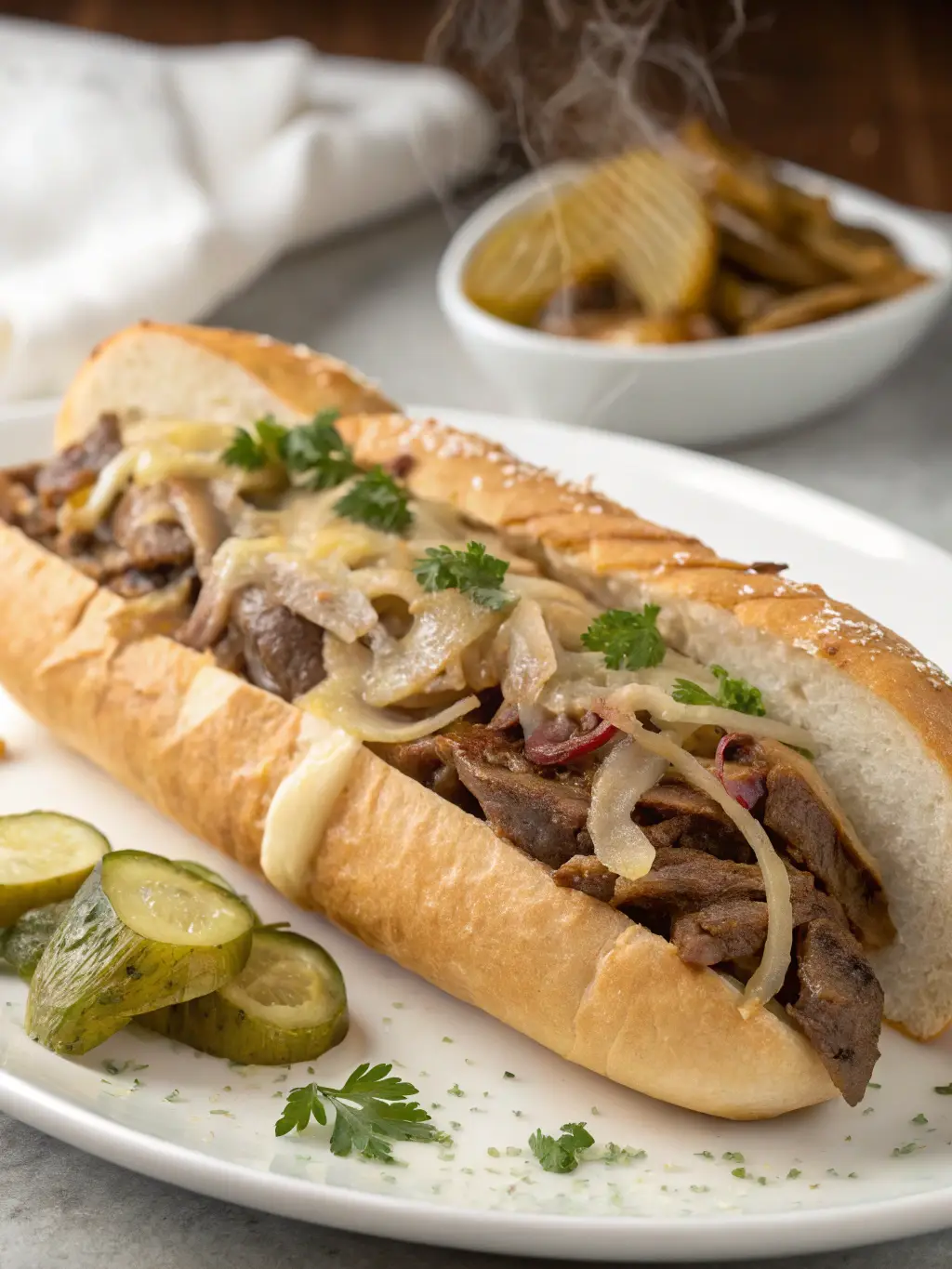
One pan, three heat zones and a sixty-second window on the beef — a sandwich that is mostly about sequence.
Total: 35 minYield: 4 sandwichesMethod: Pan Searing
In this recipe
Thin enough matters more than anything else
Ribeye cut at a normal steak thickness will never behave like cheesesteak filling. It stays in identifiable chunks, it needs long enough in the pan to overcook, and it fights the bread when you bite.
Paper-thin is the target — thin enough that a slice drapes rather than stands. Twenty to thirty minutes in the freezer firms the fat and muscle just enough for a sharp knife to take clean sheets off the cut. Longer than that and the steak freezes solid and slices in shards.
The alternative is simply asking the butcher to shave it, which most will do at no extra cost and which gets closer to the result than home slicing usually manages. Ribeye is the cut for it because the marbling melts into the pan and keeps the beef from drying at the speed it cooks.
The order the pan runs in
Everything happens in the same skillet, so the sequence is the recipe.
- Rolls, medium heatButter and toast the cut faces first, while the pan is still clean and moderate. Doing this last means toasting bread in beef fat and losing the crisp edge that keeps the filling from soaking in.
- Vegetables, medium-highOnions and peppers need six to eight minutes and some space. This is the only stage with any patience in it.
- Split the pan, high heatVegetables to one side, butter on the bare side, heat up. Two temperatures in one skillet is what lets the beef sear without the onions burning.
- Beef, ninety seconds totalIn, undisturbed, flipped, out. This is the entire cooking time for the meat and the reason everything else is ready first.
- Piles and cheese, medium-lowFour portions, provolone on top, a splash of water away from the cheese, lid on. The steam melts it evenly in well under a minute.
Before the beef hits the pan
Once the meat goes in there is no time to fetch anything.
- Rolls split, toasted and open on the board.
- Provolone unwrapped and separated into four pairs.
- Beef sliced, on a plate, patted dry — wet meat steams instead of searing.
- Salt, pepper and Worcestershire within reach of the stove.
- A lid that fits the skillet, for the cheese step.
Troubleshooting
| Problem | Cause | Fix |
|---|---|---|
| The beef is chewy | It was cut too thick, or with the grain. | Slice against the grain and thinner than feels necessary. Partial freezing makes this possible. |
| The meat grayed instead of browning | The pan was crowded or not hot enough. | Sear in two batches on high heat and leave it alone for the first 45 seconds. |
| The roll went soggy | It was not toasted, or the filling sat in it. | Toast the cut sides in butter, and build the sandwiches right before serving. |
| The cheese did not melt | The pan cooled once the heat came down. | Add the couple of teaspoons of water and cover. Steam melts provolone far faster than residual heat. |
| The onions burned | They stayed over high heat while the beef seared. | Push them to the cooler side of the pan before raising the heat. |
Storage
Assembled sandwiches do not keep — the bread absorbs the juices within the hour. Store the filling on its own instead, refrigerated up to 3 days.
Reheat the filling in a hot skillet for a minute or two rather than in a microwave, which turns thin beef rubbery, and reheat it to 165°F (74°C), the USDA safe temperature for leftovers. Toast a fresh roll and build the sandwich again from there.
The filling freezes for up to 2 months, though the peppers soften noticeably. Onions and beef alone freeze better.
Philly Cheesesteak Roll
Shaved ribeye seared hard against caramelized onions and peppers, melted under provolone in the pan, and slid into a buttered, toasted hoagie roll. The whole thing depends on how thin the beef is cut.
- Bread
- Main Dish
- Pan Searing
Cook’s checkpoint
- Frying oil
- 350°F / 175°C
- Chicken, thickest part
- 165°F / 74°C
Use a food thermometer. Color and time alone don’t confirm poultry is done.
Ingredients
For the filling
To build
Instructions
Notes
- Sliced mushrooms, hot cherry peppers or pickled jalapeños can be folded in at step 6. Purists leave the bell pepper out entirely, which the recipe survives.
- American cheese melts more smoothly than provolone and is the other traditional choice; it is also considerably saltier, so cut back on the added salt if you use it.
Cooking Mode
Questions
- Is there a cheaper cut than ribeye?
- Top sirloin sliced just as thin is the usual substitute and costs less. It has far less marbling, so it dries out more quickly — keep the sear to the shorter end of the range.
- Do peppers belong in a cheesesteak?
- It depends who you ask. They are a common addition rather than a requirement, and leaving them out changes nothing else in the method.
- Can this be made on a griddle for a crowd?
- Yes, and a flat griddle is easier than a skillet because there is room to keep the vegetables and beef genuinely separate. Keep one zone hot and one moderate.
- Why add water to the pan for the cheese?
- It creates steam under the lid, which melts provolone evenly in about thirty seconds. Adding it directly onto the cheese instead washes the surface and leaves it stringy.