Cheesy Taco Pasta
Pasta cooked in its own sauce comes out tasting of it. The trade is that the liquid has to be measured, not poured by eye.
Total: 40 minYield: 6 servingsMethod: Stovetop
In this recipe
Why cook the pasta in the sauce
Boiled separately, pasta is cooked in plain water, drained, and then coated in a sauce it never absorbed. Cooked in the sauce, it takes that liquid up as it hydrates, so the seasoning is inside each shell rather than on it.
The second effect is thickening. Starch that would normally go down the sink stays in the pan and binds the sauce, which is why this needs no cream, roux or slurry to end up thick.
The trade-off is that there is no draining step to correct a mistake. Too much liquid gives soup; too little and the pasta is chalky in the middle with a scorched base. Three cups of broth plus a can of tomatoes for twelve ounces of pasta is the ratio this recipe is built on, and it is not a place to improvise.
Managing the liquid
- Submerged at the startPush the shells under before the lid goes on. Any left proud of the liquid will stay hard while the rest cooks.
- A lively simmer, not a boilToo gentle and the pasta absorbs before the sauce reduces; too hard and the base scorches before the middle is done.
- Stir twice, not constantlyEnough to stop the shells welding to the pan. Constant stirring knocks the starch out and makes the sauce gluey.
- Judge by the sauce, not the clockIt should cling to the shells rather than pool around them. Two or three uncovered minutes fixes a loose pan.
- It keeps thickening off the heatPull it slightly looser than looks right. By the time it reaches the table it will have tightened noticeably.
Troubleshooting
| Problem | Cause | Fix |
|---|---|---|
| The base scorched | The simmer was too vigorous or it was not stirred. | A lively simmer with the lid on, stirred twice. A heavy pan helps considerably. |
| The sauce is soupy | Extra liquid was added. | Keep to the ratio, and simmer uncovered for a few minutes to reduce. |
| The pasta is chalky in the middle | Not enough liquid, or some shells sat above it. | Submerge everything at the start and add a splash of broth if the pan dries early. |
| The cheese went stringy and greasy | It was added over direct heat. | Off the burner entirely. The pan holds more than enough heat to melt two cups of cheddar. |
| It tastes dusty | The spices went in with the broth. | Forty-five seconds in the hot pan with the beef fat, before any liquid. |
Storage and reheating
Refrigerate up to 3 days. One-pot pasta tightens more than most overnight, because the shells keep drawing in the sauce they were cooked in — expect it to look almost dry.
Reheat to 165°F (74°C), the USDA safe temperature for leftovers, over low heat with a good splash of broth or milk stirred through. Add the tortilla chips and fresh tomato after reheating, never before.
It freezes for 2 months, though the pasta softens noticeably. If you plan to freeze it, undercook the shells by a couple of minutes and hold the sour cream back until reheating.
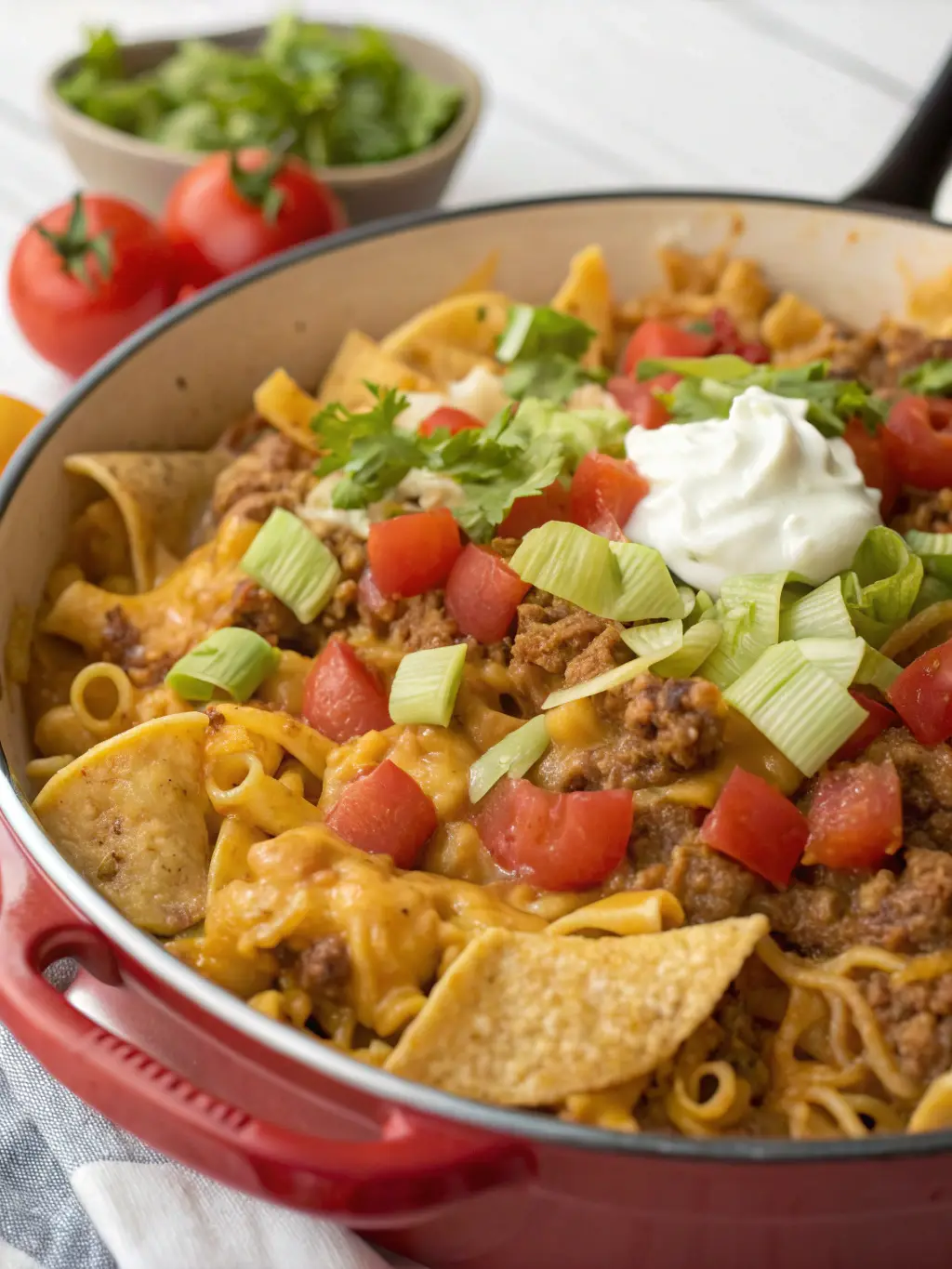
Cheesy Taco Pasta
Pasta cooked directly in a seasoned beef and tomato broth so it absorbs the sauce instead of being coated by it, finished with cheddar off the heat. One pot, and the liquid is measured rather than guessed.
- Beef
- Main Dish
- Stovetop
Cook’s checkpoint
- Frying oil
- 350°F / 175°C
- Chicken, thickest part
- 165°F / 74°C
Use a food thermometer. Color and time alone don’t confirm poultry is done.
Ingredients
For the beef
For the pot
To finish
Instructions
Notes
- Three cups of broth to twelve ounces of pasta is the working ratio for cooking pasta directly in its sauce. It is less than you would boil pasta in, because none of it is drained away.
- Medium shells hold the sauce inside as well as outside. Long strands do not work in a one-pot method — they clump before they soften.
Cooking Mode
Questions
- Can a different pasta shape be used?
- Short shapes with some structure: shells, rotini, penne or elbows. Long strands clump in a one-pot method and cook unevenly. Cooking time varies by shape, so judge by texture rather than the clock.
- Can this be made with ground turkey?
- Yes, cooked to 165°F (74°C) rather than 160°F — ground poultry carries a higher safe minimum. Add a tablespoon of oil, since turkey renders very little fat for the spices to bloom in.
- Is a packet of taco seasoning easier?
- It works. Mixing your own controls the salt, which matters here because the broth and cheddar are already contributing plenty and there is no draining step to dilute it.
- Why add sour cream at the end?
- It smooths the tomato's acidity and loosens the sauce slightly. Added over heat it would split, so it goes in with the pan already off the burner.