Garlic Parmesan Drumsticks
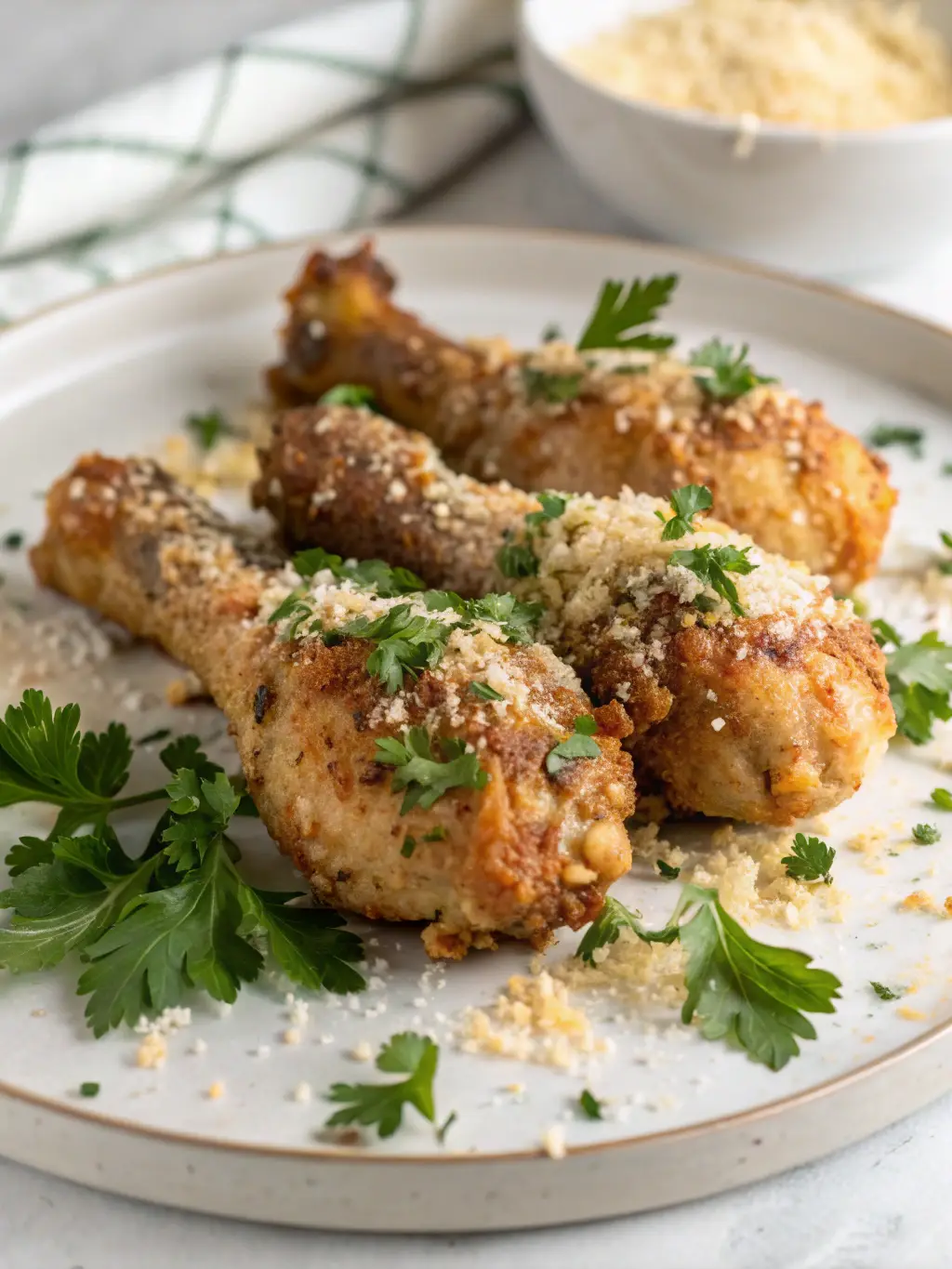
Crisp oven skin is a dryness problem before it is a heat problem, and it is solved before the oven is switched on.
Total: 1 hrYield: 4 servingsMethod: Baking
In this recipe
Water is the enemy, not the oven
Chicken skin cannot brown while it is wet. Water has to evaporate before the surface can climb past boiling point, and until that happens the skin is effectively being steamed no matter what the oven dial says.
So the first job is mechanical: pat every drumstick genuinely dry, into the creases and around the joint. It takes a few minutes and several paper towels, and it does more for the finished texture than any ingredient in the recipe.
The baking powder then does something less obvious. It is alkaline, and raising the surface pH speeds up the browning reaction while also drawing a little moisture out and dispersing it. Meat treated this way browns faster and dries into a shatter-crisp layer rather than a leathery one. Half a tablespoon per pound is the working ratio; more than that and it becomes detectable.
The wire rack finishes the argument. Chicken sitting on a flat pan releases juice that pools underneath and steams the bottom skin, so half of every drumstick comes out soft. Raised on a rack, air circulates and all sides dry together.
Two temperatures, two jobs
A single hot oven browns the skin before the fat under it has rendered, which is why it comes out crisp in patches and flabby elsewhere.
- 250°F for 25 minutesDeliberately below browning temperature. Fat renders slowly out of the skin and moisture leaves; nothing colors yet, and that is correct.
- The switchNo need to remove the pan. Just raise the dial and let the oven climb — the drumsticks are already dry and rendered by this point.
- 425°F for 20-25 minutesNow browning happens fast, on a surface with no water left to fight. This is where the color and the crackle arrive.
- 165°F, away from the boneThe safety figure. Bone conducts heat and gives a falsely high reading, so probe into the thickest muscle instead.
- Toss while hotButter and parmesan cling to hot skin and slide off cool skin. This is a ten-minute window, not a step to leave until everyone sits down.
Troubleshooting
| Problem | Cause | Fix |
|---|---|---|
| The skin is soft | The drumsticks were not dried, or they were baked on the pan rather than a rack. | Dry thoroughly and use a rack. Both matter and neither can be substituted. |
| There is a metallic aftertaste | Aluminum-based baking powder. | Use aluminum-free. At a tablespoon it is noticeable where at a teaspoon it would not be. |
| The bottoms are pale | No air underneath. | A wire rack, and space between each piece. Crowding produces the same problem. |
| The parmesan fell off | The chicken had cooled before tossing. | Toss straight out of the oven while the butter is liquid and the skin is hot. |
| The garlic tastes burnt | It browned in the butter. | Medium-low for one minute only — fragrant, not colored. |
Storage and reheating
Refrigerate up to 3 days. The skin will not stay crisp overnight under any storage method, so plan around eating these the day they are made.
Reheat to 165°F (74°C), the USDA safe temperature for leftovers, on a rack at 400°F for 10 to 12 minutes. That recovers a surprising amount of the crispness; a microwave recovers none of it and turns the skin rubbery.
They freeze for 2 months, best reheated from frozen on a rack at 375°F for about 25 minutes. Add fresh garlic butter and parmesan after reheating rather than freezing them already coated.
Garlic Parmesan Drumsticks
Drumsticks dried hard, baked at two temperatures for crisp skin, then tossed in garlic butter and parmesan while hot. No breading and no frying — the crispness comes from dryness and heat.
- Chicken
- Main Dish
- Baking
Cook’s checkpoint
- Frying oil
- 350°F / 175°C
- Chicken, thickest part
- 165°F / 74°C
Use a food thermometer. Color and time alone don’t confirm poultry is done.
Ingredients
For the drumsticks
For the garlic parmesan toss
Instructions
Notes
- Baking powder is not a typo and it is not for leavening. It raises the skin's surface pH, which speeds up browning and helps it dry into a genuinely crisp layer.
- Grate the parmesan finely from a block. Pre-grated cheese is coated in starch and sits on the skin in visible dry flecks rather than melting into the butter.
Cooking Mode
Questions
- Why baking powder on chicken?
- It is alkaline, which accelerates browning, and it helps draw and disperse surface moisture. It is a texture treatment, not a leavening one, and it is the main reason oven skin can approach fried texture.
- Can thighs or wings be used?
- Yes, same method. Wings need about 15 minutes less at the high stage; bone-in thighs need about the same as drumsticks. All go to 165°F measured away from the bone.
- Can this be done in an air fryer?
- Yes — 250°F for 15 minutes then 400°F for 12 to 15, in a single layer. The mechanism is the same and the smaller chamber moves air more aggressively.
- Why is the parmesan added after baking?
- Baked on, it burns and turns bitter well before the chicken is done. Tossed on at the end it melts into the garlic butter and stays creamy and sharp.