Italian Meatballs
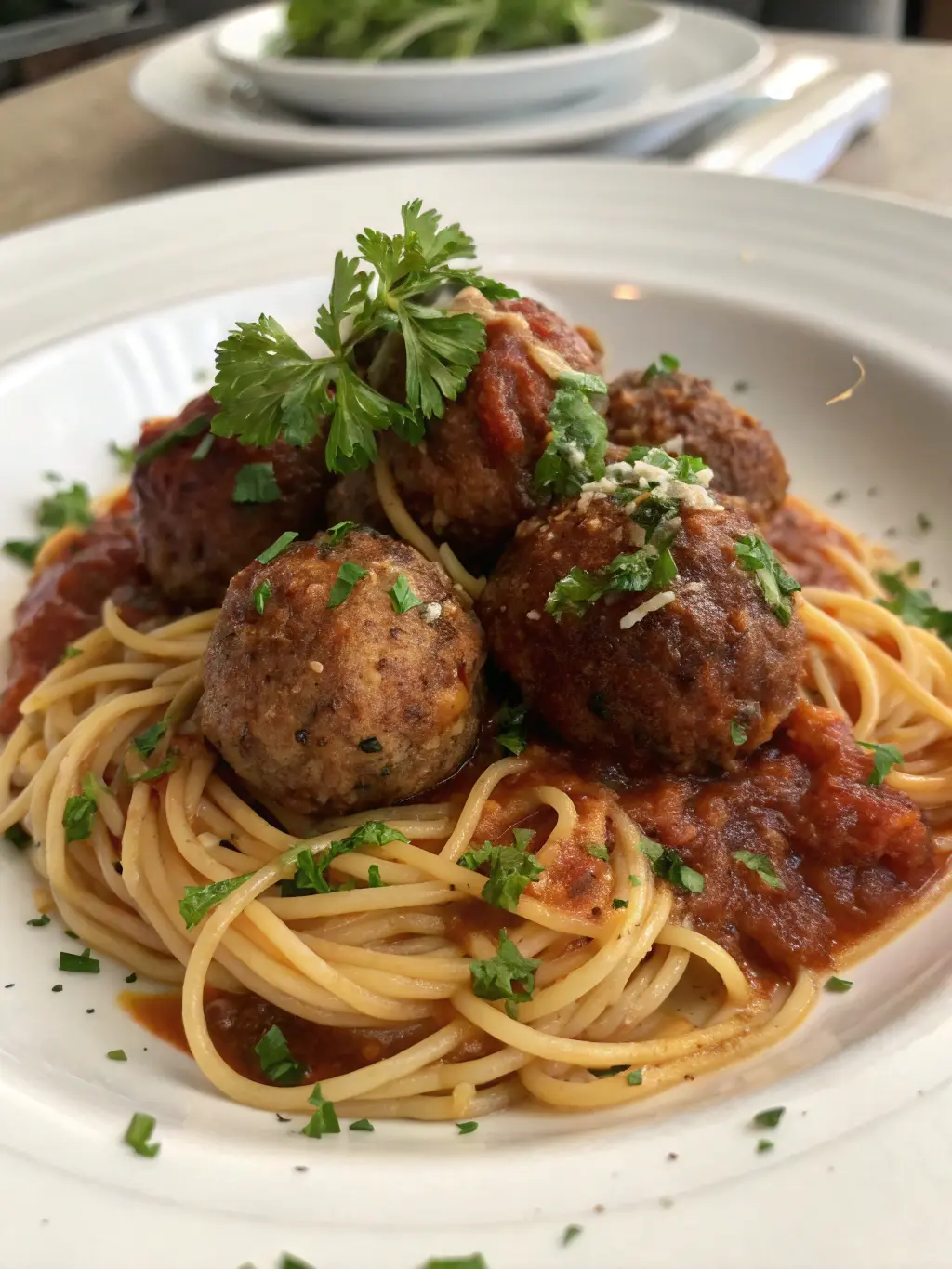
Soaked bread, a light hand, and a finish in sauce rather than in the pan — the three things that separate tender from bouncy.
Total: 1 hr 20 minYield: 6 servingsMethod: Stovetop
In this recipe
Why soaked bread and not breadcrumbs
The panade is the part most recipes gloss over and the part that actually determines the texture. Two slices of bread and half a cup of milk, left to collapse, then mashed.
- 01It adds moisture instead of taking itDry breadcrumbs absorb liquid from the meat as they hydrate. Bread already soaked in milk brings its own, and releases it slowly during the simmer.
- 02It physically interrupts the proteinStarch and milk solids get between the meat proteins and stop them linking into a tight springy network as they cook. That network is what makes a dense meatball dense.
- 03It survives thirty-five minutes in sauceA meatball finished in liquid is in a moist environment but is still cooking. The panade is what lets it come out of that simmer tender rather than tight.
Handling, in five points
Nearly every meatball fault is a handling fault rather than a recipe fault.
- Mix with hands, not a spoon or a mixer — you can feel when the dry streaks are gone, which is the moment to stop.
- Stop at 'just combined'. Overworked ground meat develops a sausage-like bounce that is obvious in the finished dish.
- Roll lightly. The mixture should just hold together, not be compacted.
- Keep them the same size, about 1.5 inches, so they finish together.
- Wet your hands between batches; it stops the mixture dragging and means less handling per meatball.
Two heats, two jobs
Browning and cooking through are separate operations here, and doing both in the pan is the common mistake.
- The pan, six minutesThis is purely for color and the fond it leaves behind. The meatballs go in raw and come out raw in the middle, and that is correct.
- The fond becomes the sauceOnion and garlic go into the same pot and lift everything the meatballs left. Washing the pot here throws away the best part of the dish.
- Thirty-five minutes in sauceGentle, partly covered. The meatballs finish cooking in a moist environment instead of a dry pan, and the sauce takes on their seasoning as they do.
- 160°F at the centerChecked on the largest one. Time is a guide; the thermometer is the answer.
Troubleshooting
| Problem | Cause | Fix |
|---|---|---|
| The meatballs are dense and bouncy | Overmixed, or rolled too tightly. | Mix until just combined and roll with a light hand. This is the most common fault by a wide margin. |
| They fell apart in the sauce | Not enough binder, or they were moved too early. | Keep both eggs and the full panade, and let them set for a few minutes after they go into the sauce before stirring. |
| They are dry | All-beef mixture, or too long in the pan. | Include the pork, and brown for color only — the pan is not where they cook through. |
| The sauce tastes sharp | Canned tomato acidity. | The teaspoon of sugar is there for this. A second teaspoon is reasonable if the brand is particularly acidic. |
| The outsides are dark but the middles are pink | The pan was too hot and they were treated as fully cooked. | Moderate the heat, and rely on the simmer plus a thermometer reading of 160°F. |
Storage and reheating
Refrigerate in the sauce up to 4 days. Meatballs stored out of their sauce dry out at the surface within a day.
Reheat to 165°F (74°C), the USDA safe temperature for leftovers, over low heat with the lid on. They will absorb more sauce overnight, so a splash of water when reheating is usually needed.
They freeze well for 3 months either cooked in sauce or browned and frozen raw in the middle. Frozen raw is the more useful of the two — drop them straight into simmering sauce and add about 15 minutes.
Italian Meatballs
Beef and pork bound with a milk-soaked bread panade, browned for color and finished in tomato sauce. The panade is what keeps them tender through a simmer that would otherwise dry them out.
- Beef
- Main Dish
- Stovetop
Cook’s checkpoint
- Frying oil
- 350°F / 175°C
- Chicken, thickest part
- 165°F / 74°C
Use a food thermometer. Color and time alone don’t confirm poultry is done.
Ingredients
For the panade
For the meatballs
For the sauce
Instructions
Notes
- The beef and pork mix matters. All beef gives a firmer, drier meatball; the pork brings fat and a softer texture. A 2:1 ratio is the usual balance.
- Dry breadcrumbs are not a substitute for the panade. They absorb moisture from the meat rather than adding any, which is the opposite of what this needs.
Cooking Mode
Questions
- Can the meatballs be baked instead of browned in a pan?
- Yes — 400°F for about 15 minutes gives color with less mess, though you lose the fond that the sauce is built on. If you bake, start the sauce with a little extra olive oil and take the onion further.
- Is the pork essential?
- Not essential, but it is doing real work. All-beef meatballs come out firmer and drier. If you leave the pork out, use 80% lean beef rather than 85%.
- What pasta suits these?
- Spaghetti is traditional. Anything with enough surface to hold a chunky tomato sauce works — rigatoni and bucatini are both good with a sauce this thick.
- Can they be made ahead?
- The mixture can be rolled a day ahead and refrigerated covered, which actually helps them hold their shape. The finished dish also reheats better than most, so making it a day early is no compromise.