Pepper Steak with Rice Pilaf
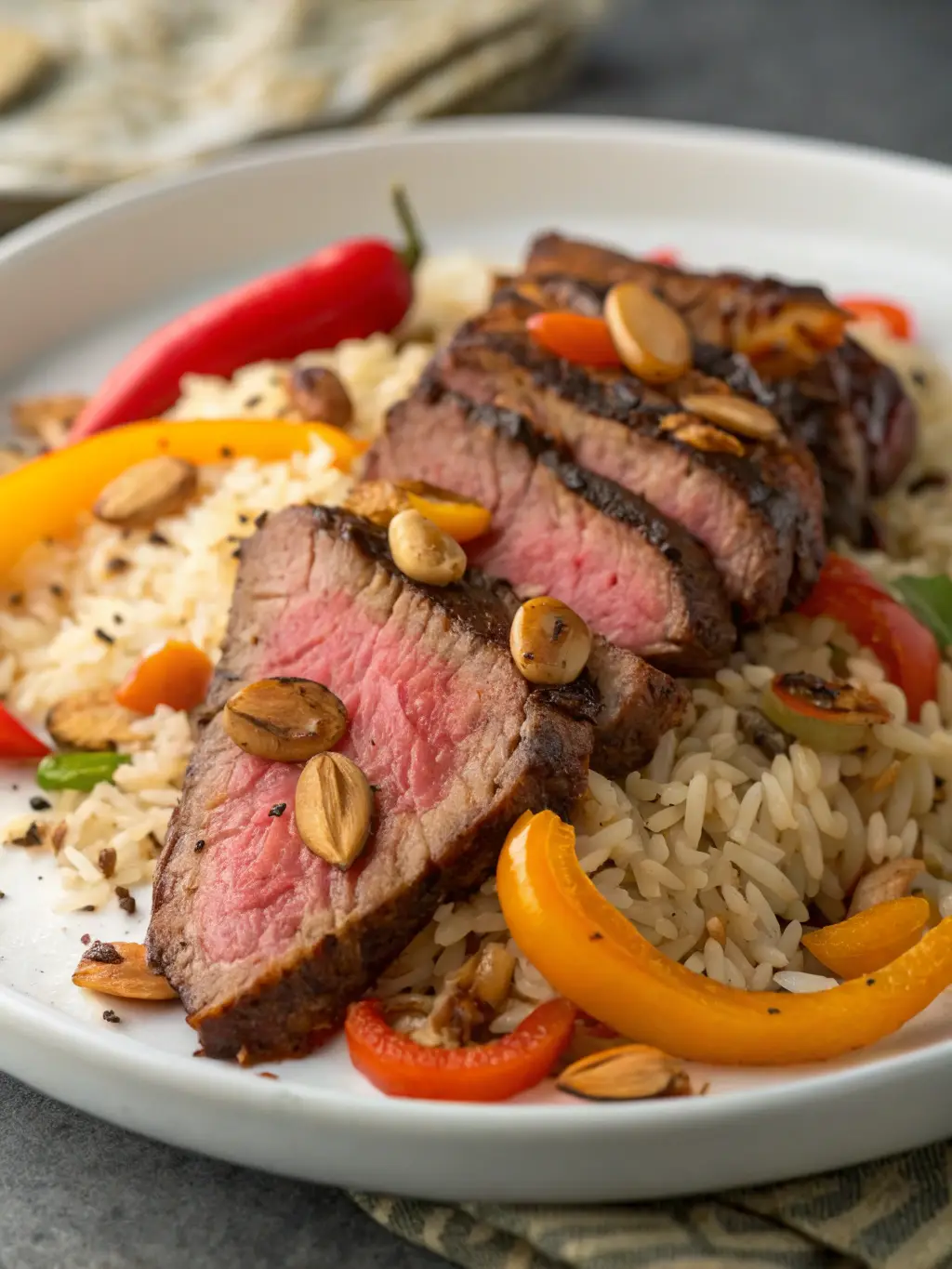
The beef takes three minutes. The rice takes thirty. Starting them in the right order is most of the recipe.
Total: 55 minYield: 4 servingsMethod: Pan Searing
In this recipe
Running the pans in the right order
This is two recipes sharing a plate, and they have opposite demands. The pilaf needs thirty minutes of mostly unattended time, eighteen of them undisturbed under a lid. The beef needs three minutes of undivided attention at the highest heat the stove will give.
So the rice starts first and the beef goes on while it is resting. That ordering also means the pilaf gets its full ten-minute steam off the heat, which is when the grains finish absorbing and separate properly — lifting the lid early is the single most common way to end up with wet rice.
The marinade on the beef runs during the rice's toasting and simmering stages, so fifteen minutes costs nothing. Everything is prepped before the skillet is lit, because once it is there is no time to slice a pepper.
What makes it a pilaf
Four differences from plain boiled rice, and each one has an effect you can taste.
- Fat firstButter in the pan before the rice. It coats each grain, which keeps them separate later.
- Toast the grainsThree to four minutes stirring until they turn opaque and smell nutty. This is the defining step and skipping it makes plain rice with onion in it.
- Broth, not waterBeef broth ties the rice to the beef on top of it. Water gives a neutral bed that the sauce has to work harder against.
- Rest with the lid onTen minutes off the heat. The residual steam finishes the grains evenly; the difference between fluffy and sticky is entirely in this stage.
Slicing the beef
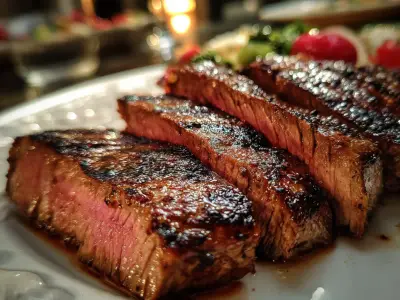
- Twenty minutes in the freezerFirms the steak enough to take clean quarter-inch slices. At room temperature the knife drags and the slices come out uneven.
- Against the grain, alwaysFind the direction the fibers run and cut across them. On sirloin this matters less than on flank, but it still decides how the meat chews.
- A quarter inch, not thinnerThinner strips overcook before they color. This thickness survives ninety seconds a side on high heat.
- Cornstarch in the marinadeIt forms a thin film that holds moisture through the sear. This is why restaurant stir-fried beef stays tender and home versions often do not.
Troubleshooting
| Problem | Cause | Fix |
|---|---|---|
| The rice is sticky | The lid was lifted during the rest, or it was not toasted. | Toast the grains in butter first and leave the lid alone for the full 10 minutes. |
| The beef is gray and tough | The pan was crowded so it steamed. | Two batches on genuinely high heat, undisturbed for the first 90 seconds. |
| The peppers went soft | Cooked too long or on moderate heat. | Three to four minutes on high. They should char at the edges and still snap. |
| The sauce is watery | The slurry was added to a pan that was not simmering. | Bring the liquid to a simmer first, then add the slurry and give it a full minute. |
| The beef tightened after saucing | It went back in too early and cooked twice. | Thirty seconds at the end, off the heat immediately after. |
Storage and reheating
Store the pepper steak and the pilaf separately, refrigerated up to 3 days. Rice left sitting in sauce absorbs it entirely and turns to porridge.
Reheat both to 165°F (74°C), the USDA safe temperature for leftovers. The beef does best for a minute in a hot skillet; the rice does best with a spoonful of water and a lid, which steams it back to separate grains.
The pepper steak freezes for 2 months, though the peppers soften noticeably. Cooked pilaf freezes acceptably but is quick enough to make fresh that it rarely justifies the space.
Pepper Steak with Rice Pilaf
Strips of sirloin seared fast with bell peppers in a soy and ginger sauce, served over a pilaf toasted in butter before any liquid arrives. Two pans, two techniques, one plate.
- Beef
- Main Dish
- Pan Searing
Cook’s checkpoint
- Frying oil
- 350°F / 175°C
- Chicken, thickest part
- 165°F / 74°C
Use a food thermometer. Color and time alone don’t confirm poultry is done.
Ingredients
For the beef
For the rice pilaf
For the sauce
Instructions
Notes
- Sirloin is the practical cut here. Flank works and is cheaper but must be sliced against the grain with more care; anything from the round is too lean for a 90-second sear.
- Freezing the steak for 20 minutes firms it enough to slice cleanly at a quarter inch, which is difficult at room temperature.
Cooking Mode
Questions
- What cut of beef is best?
- Sirloin — enough marbling to survive high heat, tender enough to slice thin without pounding. Flank works if sliced carefully against the grain. Round is too lean and comes out dry.
- Can the rice be plain instead of a pilaf?
- Yes, and the dish still works. The toasting step takes four minutes and changes the texture and the aroma noticeably, which is why it is worth doing.
- Is this the same as beef and broccoli?
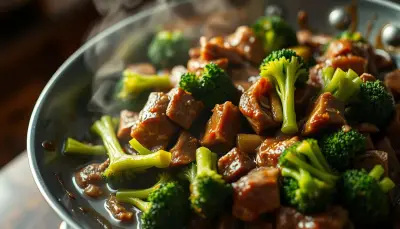
- Same family of technique — velveted beef, high heat, a thickened soy sauce — but a different dish. The peppers stay crisp and the sauce here is sharper, with vinegar in it.
- Can it be made with chicken?
- Yes. Slice boneless thighs the same way and cook to 165°F (74°C), the USDA safe minimum for poultry, which will take about a minute longer per batch.