Sriracha Maple Salmon
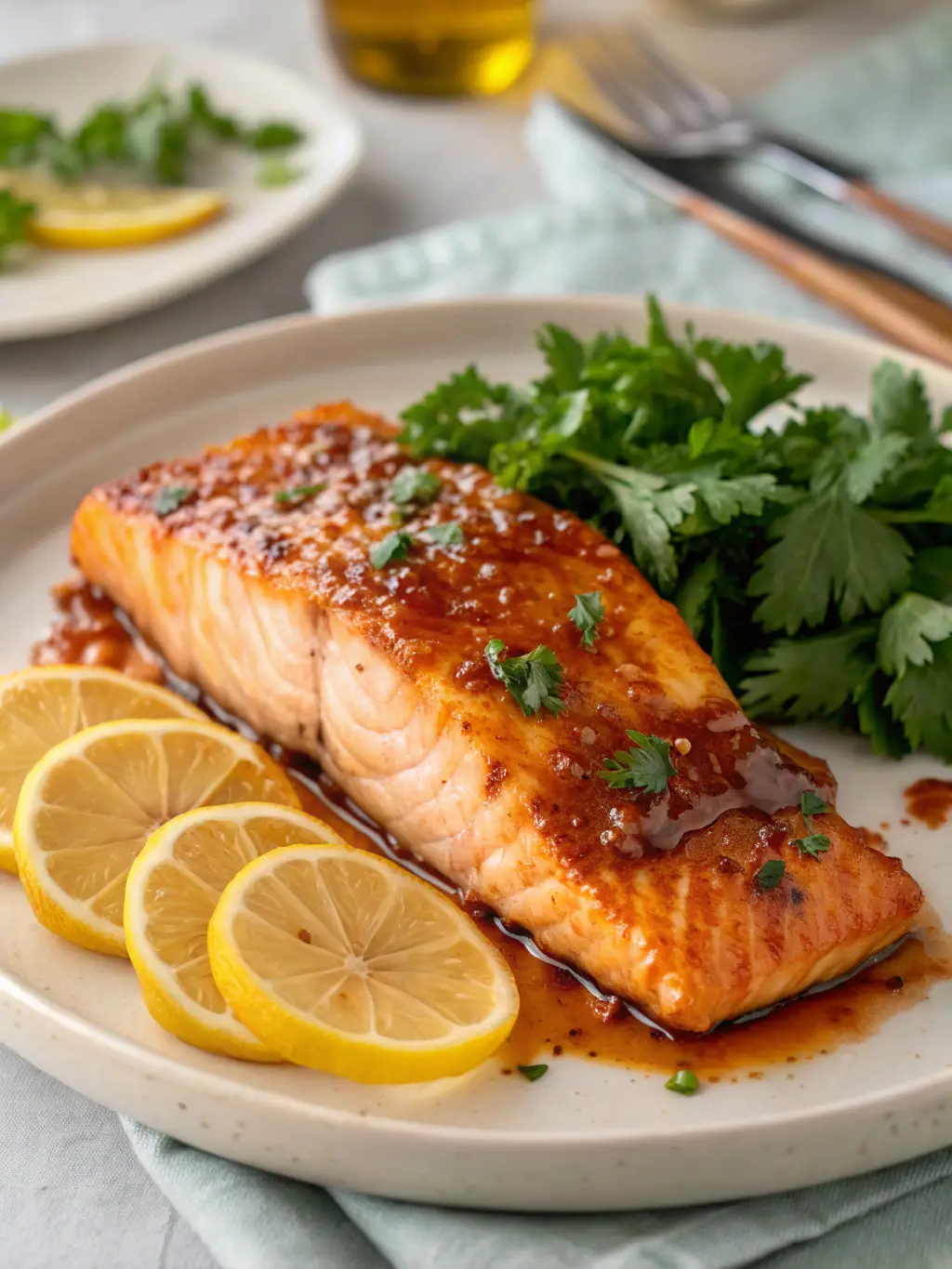
A glaze that is a third sugar cannot go on at the start. Everything about the method follows from that.
Total: 25 minYield: 4 servingsMethod: Pan Searing
In this recipe
Why the glaze goes on in stages
Maple syrup begins to scorch at around 300°F, which is well below the temperature of a pan hot enough to crisp salmon skin. A fillet glazed before it goes into the skillet produces a black bitter crust in about ninety seconds while the fish inside is still raw.
The method here separates the two jobs. The skin gets its four minutes in a dry hot pan with nothing sweet anywhere near it. Then the glaze goes on in the oven, at a temperature the sugar can survive, in two thin coats rather than one thick one.
Two coats rather than one is not fussiness. A single heavy layer never fully sets — it stays wet on top and slides off the fillet. Two thin coats each get a few minutes to tack up, which is what produces a glaze that clings.
Reducing the glaze in a saucepan first is the third part. Straight from the bowl it is thin and runs off; reduced to a spoon-coating syrup it stays where it is brushed.
Fifteen minutes, three heats
One skillet moves from burner to oven, and the glaze arrives only after the hard heat is done.
- Saucepan, 4-5 minutesThe glaze reduces to a syrup. This happens before the salmon is touched, so it is ready when needed.
- Skillet, skin down, 4 minutesDry high heat, no glaze. The skin crisps and releases on its own when it is ready — forcing it early tears it off.
- Oven at 400°F, first coatA third of the glaze, five minutes. Moderate oven heat sets the sugar instead of scorching it.
- Second coat, 3-5 minutesThe layer that gives the finished gloss. Watch it rather than the clock at this point — thin fillets can be ready at three.
- Rest, then the rest of the glazeThe last of it goes on off the heat, where it stays bright rather than caramelizing further.
145°F, and the number you will see elsewhere
USDA FSIS publishes one safe minimum internal temperature for fish: 145°F (63°C) at the thickest part. That is the figure this recipe cooks to and the figure in the method above.
A great many kitchens pull salmon at 125°F to 130°F, and the migrated version of this page did too. At that temperature the center is translucent and softer. It is a texture preference and it sits below the published safe minimum — both statements are true, and they answer different questions.
The gap is small in practice on a fillet this size: roughly two minutes in a 400°F oven. Overshooting well past 145°F is what actually ruins salmon, which is an argument for a thermometer rather than for a lower target.
Troubleshooting
| Problem | Cause | Fix |
|---|---|---|
| The glaze burned black | It went on before or during the sear. | Sear the skin dry, and glaze only once the skillet is in the oven. |
| The glaze slid off | It was not reduced first. | Simmer it to a spoon-coating syrup. Thin glaze runs into the pan and burns there instead. |
| The skin is soft | The fillet was moved too early or the pan was not hot enough. | Wait for it to release on its own — that is the signal the skin has crisped. |
| White curd on the surface | Cooked too hot or too far; that is albumin squeezed out of the muscle. | 400°F and a thermometer. A little is normal, a lot means overcooking. |
| It is too spicy or too sweet | Sriracha brands vary a great deal in heat. | Adjust the sriracha alone, between one and three tablespoons. Leave the maple at a third of a cup or the glaze will not reduce properly. |
Storage and reheating
Refrigerate up to 3 days in a sealed container. The glaze firms as it chills and the fillets are easy to lift out whole.
Reheat to 165°F (74°C), the USDA safe temperature for leftovers, covered at 275°F. That is a second cooking and the fish will be firmer — there is no way around it, which is why cold leftover salmon flaked into a bowl or salad is usually the better plan.
Cooked salmon freezes for 2 months but loses moisture noticeably, and the glaze goes dull. Freezing raw fillets and cooking them fresh gives a far better result.
Sriracha Maple Salmon
Salmon fillets seared and finished in the oven under a maple and sriracha glaze brushed on in two stages. The sugar in the glaze is why it goes on late rather than at the start.
- Seafood
- Main Dish
- Pan Searing
Cook’s checkpoint
- Frying oil
- 350°F / 175°C
- Chicken, thickest part
- 165°F / 74°C
Use a food thermometer. Color and time alone don’t confirm poultry is done.
Ingredients
For the glaze
For the salmon
To serve
Instructions
Notes
- Many cooks pull salmon nearer 125°F to 130°F for a softer center, and the migrated source for this page used those figures. Tasty Recipes states 145°F (63°C) because that is the published USDA FSIS safe minimum for fish; the lower number is a texture preference, not a safety one, and is stated here so the difference is visible rather than hidden.
- Pure maple syrup, not pancake syrup. The latter is corn syrup with flavoring and it scorches faster while adding a distinctly artificial note to a glaze this concentrated.
Cooking Mode
Questions
- Can this be baked without searing first?
- Yes — 400°F for 12 to 15 minutes, glazing at the halfway point. You lose the crisp skin, which is much of the appeal, but the glaze behaves the same way.
- Is skin-on necessary?
- It holds the fillet together and protects the flesh from the pan, and it crisps into the best part of the dish. Skinless fillets work but need gentler handling and about a minute less on the first side.
- How spicy is it?
- Two tablespoons of sriracha across four fillets is moderate — the maple and soy blunt a lot of it. Sriracha brands vary considerably, so adjust that ingredient alone.
- What goes well alongside?
- Something plain and absorbent to catch the glaze — steamed rice is the natural partner. A sharp green vegetable such as broccolini or snap peas balances the sweetness.